Books, research and articles
Four non-fiction history books, peer-reviewed research and more than 2,200 articles on prehistoric archaeology and ancient sciences.
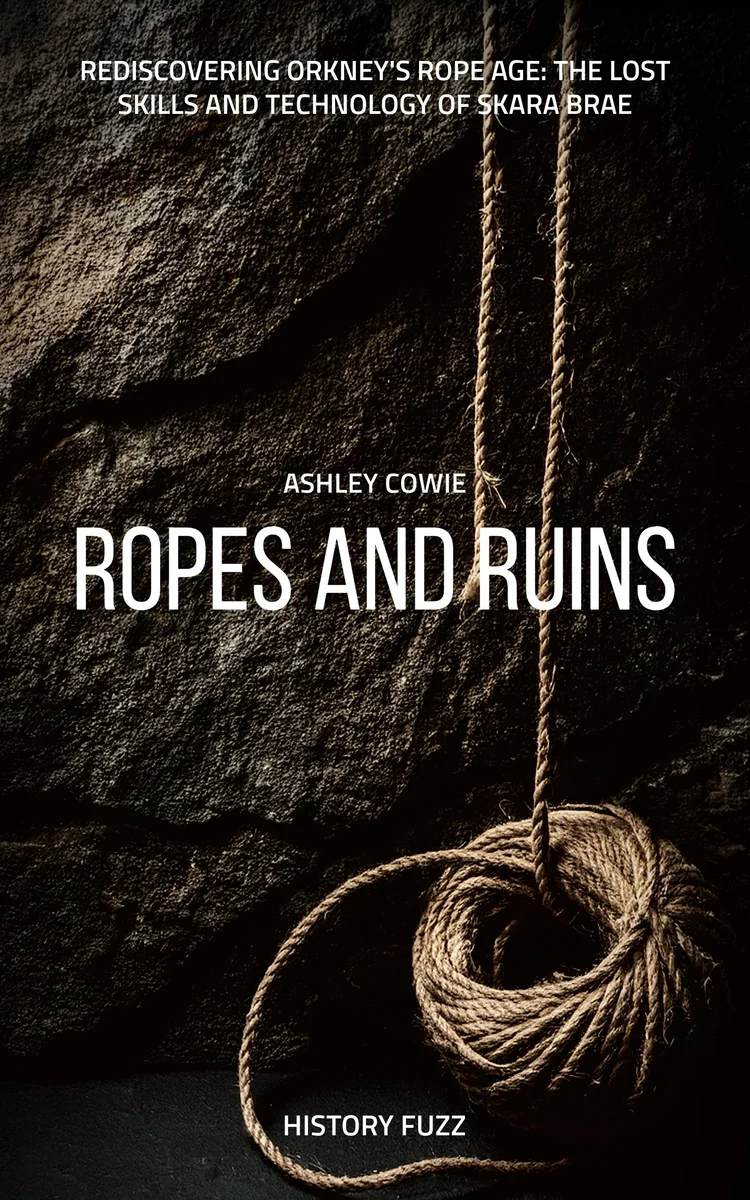
Ropes and Ruins
An exploration of Neolithic Orkney that redefines our understanding of ancient craftsmanship. Through the geometry and architecture of Orkney's megalithic sites, it reveals a long-overlooked prehistoric technology: rope production and measuring skills.
The book challenges Professor Alexander Thom's theories about elite astronomer-priests, and shows how ropes, geometry and stonework combined to create one of history's most extraordinary prehistoric landscapes.
More books
Archaeoastronomy, mythology and sacred geography

Rediscovering Colombia's Moon Goddess Of El Dorado
This research provides new insights into Muisca archaeoastronomy, territorial organization, and creation mythology, revealing previously uncharted geodetic alignments associated with the Temple of the Moon in Chía, Cundinamarca, Colombia. Through non-intrusive archaeological methods, the study also uncovered a rare tumbaga statuette representing Chía, the Muisca goddess of the moon, offering a tangible connection to Muisca creation mythology.

Squaring And Levelling Britain’s Symbolic Kerbstones
This research investigates over 6,400 kilometres (4,000 miles) of British urban areas, analysing geographic coordinates derived from approximately 3,000 photographs of symbolically inscribed kerbstones. The study reveals a distinct pattern within Glasgow’s urban landscape, offering a novel perspective on Victorian-era Masonic practices through this unique geographical lens.

Lost Meridian of the Khmer Kings: Solstitial Alignments and Ancestral Topography at Angkor Wat
Following an interpretation of the astronomical and cosmological themes expressed in the architecture of Cambodia's Angkor Wat temple complex, a potentially significant 10th-century dynastic prime meridian is delineated, and its use in determining the precise location of Angkor Wat is posited.